

Signs of Dental Problems in Elizabeth, NJ | When to See a Dentist
Know the signs of dental problems and when to visit a dentist in Elizabeth, NJ to prevent complications and maintain oral health.
Quick Answer: Anyone in Hamilton, NJ with a tooth that cannot wait should call an office that offers same-day urgent care, ask who will perform the extraction, and learn what the visit involves. Columbia Dental in Hamilton offers same-day and urgent care appointments and tooth extraction, and a call to 609-349-7001 can confirm the earliest time for a painful or broken tooth.
The ache began as a dull warning two weeks ago. By Friday morning the cheek is puffy, chewing is off the table, and the search bar holds "emergency dentist near me." When a tooth may have to come out, the questions turn practical: who can see it today, who will do the removal, and what happens afterward. The sections below take them in that order.
Our team tries to keep natural teeth whenever possible, so removal usually comes after other options run out. Common reasons include deep decay, an infection that has damaged the tooth, a fracture that runs below the gum line, an injury from a fall or sports, and an impacted wisdom tooth. Tooth extraction is the step for a tooth that causes more trouble than it is worth. Pain alone does not settle the question. An exam and X-rays do.
Some problems get worse by the hour. These are the ones our team treats as urgent:
For a knocked-out tooth, the odds of saving it fall with each hour, so the call should come first. Each of these falls under emergency dentistry care.
Some painful teeth can be rescued. A tooth with an infected nerve may be treated with a root canal, and a weakened tooth may hold a crown afterward. Removal makes more sense when too little healthy tooth remains, when a crack runs too deep, or when infection has gone past what treatment can repair. Our dentist explains which path fits after the exam, so the plan follows what the tooth needs.
Offices handle extractions differently, so a short call helps. Useful questions include:
Clear, unhurried answers are a good sign. Oral surgery care at our office covers simple extractions, wisdom tooth extractions, and implants, so a plan with more than one step can stay under one roof.
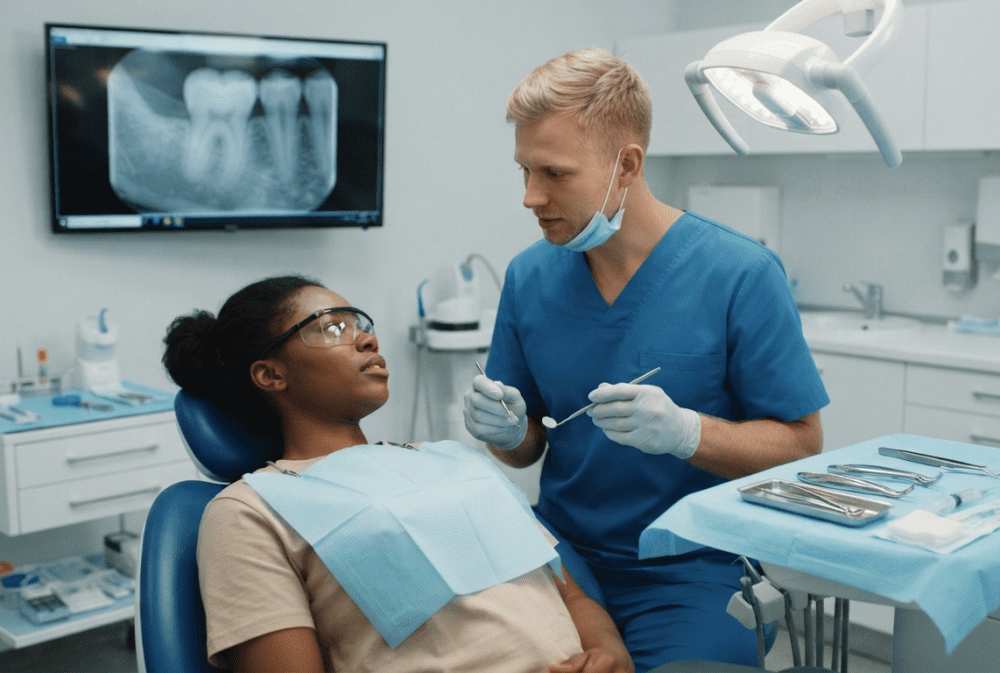
The visit starts with an exam and X-rays to check the root shape, the bone, and any infection. The area is then numbed, and the tooth is loosened and removed. The American Dental Association notes that some bleeding is normal and that a clot forms in the empty socket while the bone heals, which is why gauze is placed afterward. An impacted wisdom tooth may need a small cut in the gum or removal in pieces, and stitches are sometimes needed. A bone graft can also be added to help protect the jawbone. Our dentist walks through each step before it begins.
The first two days are for healing, and a few habits protect the clot:
Heavy bleeding or nausea after the visit deserves a call to our office.
A missing tooth leaves a space that lets neighbors drift. Dental implants, dentures, and crowns and bridges can all restore the area, and talking about the replacement at the extraction visit makes each step easier to time.
Urgent visits arrive without warning, so cost questions are fair ones. We work with most major dental insurance providers, and coverage for urgent care differs by plan. Financing through Sunbit is also part of our payment options, and our team can explain how it works during the call.
Some situations belong in an emergency room before any dental chair. Swelling that spreads across the face or neck, a fever with a swollen face, bleeding that will not stop, trouble breathing or swallowing, and any injury to the head or neck call for 911 or the nearest emergency room. Once that care is handled, contact us to plan the dental treatment.
At Columbia Dental, patients looking for a dentist in Hamilton, NJ can describe the problem by phone or book online, and our team offers same-day and urgent care appointments for dental emergencies. Bringing a list of current medications, the insurance card, and any pieces of a broken tooth helps the visit move along.
A tooth that hurts today deserves an answer today. Call 609-349-7001 to describe what is going on, or request an appointment online and mention the urgent pain so our team can look for the earliest opening.
1. Does Columbia Dental offer same-day appointments for a tooth that needs to come out?
Yes, we offer same-day and urgent care appointments for dental emergencies. Availability depends on the day, so calling 609-349-7001 first confirms the earliest time.
2. Can a badly infected tooth be removed right away?
Sometimes. After an exam, our dentist decides if the tooth can come out at once or if the infection needs attention first. Spreading swelling or a fever needs the ER.
3. Will an emergency extraction hurt?
We numb the area before starting, and anesthesia choices depend on how complex the extraction is. Our team can explain the plan before treatment begins.
4. What should be avoided after a tooth is pulled?
Skip smoking, straws, and hard rinsing for at least 24 hours, and stay with soft foods. These habits protect the clot that helps the socket heal.
5. Does insurance or financing help with an urgent extraction?
We work with most major dental insurance providers, and coverage varies by plan. Financing through Sunbit is available too, and our team can explain both during the call.


